
Dynamic Sets in OS Management Hub
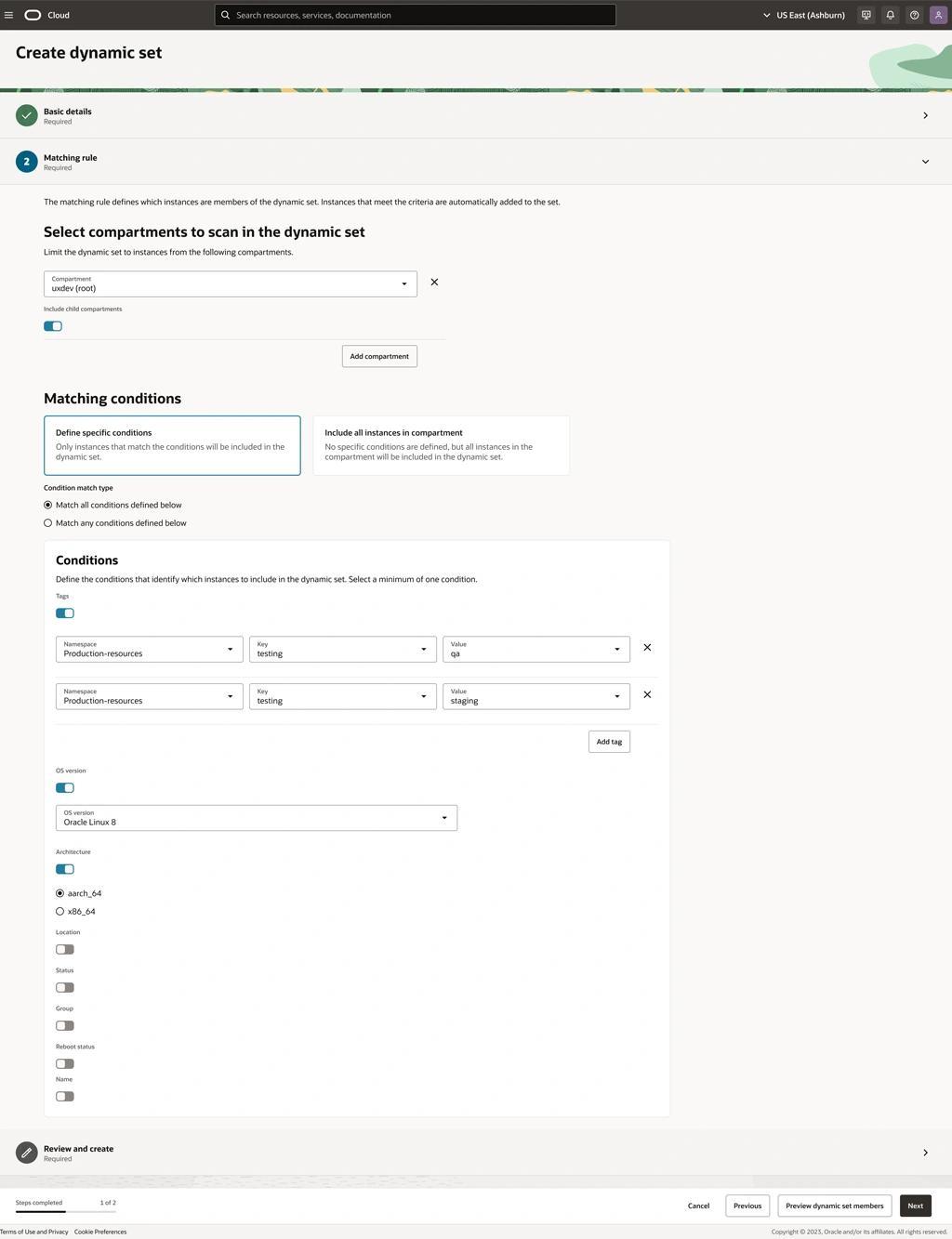
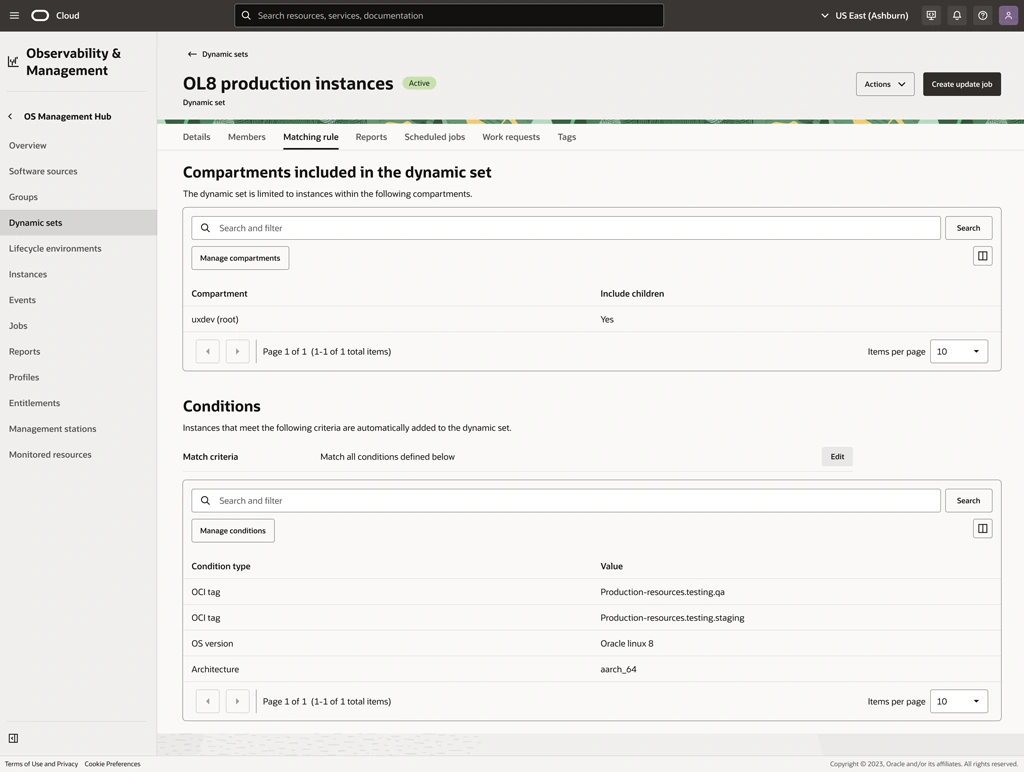
Launched in 2026, OCI Dynamic Sets are rule-based collections of managed instances that automatically update as instance attributes change. Rule criteria is defined by the user such as tags, OS version, architecture, location, status, group, reboot state, or instance name to dynamically target instances for reporting, patching, updates, and staged rollouts. Dynamic Sets can span compartments and include mixed operating systems and architectures, with incompatible actions skipped, and scheduled jobs evaluate membership when they run.

The problem
System administrators needed a scalable way to target the right instances for patching, updates, and reporting as their environments constantly change. Static groups require manual membership maintenance, become quickly outdated, and do not work well across multiple compartments or mixed operating systems. Dynamic Sets solved this by automatically identifying instances through attributes such as tags, OS version, location, and status—making fleet operations more accurate, repeatable, and easier to manage.
My impact
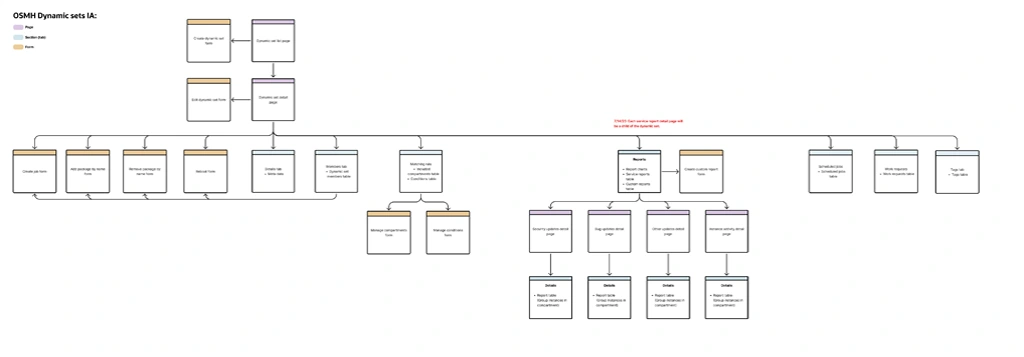
- Defined the internal information architecture structure of the service within console.
- Championed the strategy for an easier rule building expereince in the console UI.
- Ran weekly collaboration sessions with product, engineering and support to iterate on the final CRUD experiences for the service.
- Ensured all design flows aligned with the updated OCI Redwood UX guidelines.
- Worked closely with the documentation team to capture the features offered within a Dynamic Set for release notes.
Meaningful results
Customers using Dynamic Sets have noticed:
- Faster fleet operations that can target instances by compartment, tags, OS/version, architecture, status, reboot-needed state, and more, then run package updates, installs/removals, reboots, reports, and scheduled jobs against the matching fleet.
- Less ongoing maintenance. Membership updates automatically as instances begin or stop matching the rule, which is especially useful for elastic fleets and tag-based operations.
- More flexibility than static Managed Instance Groups. An instance can participate in multiple Dynamic Sets; sets can span compartments; membership is not constrained to a single OS family/version.
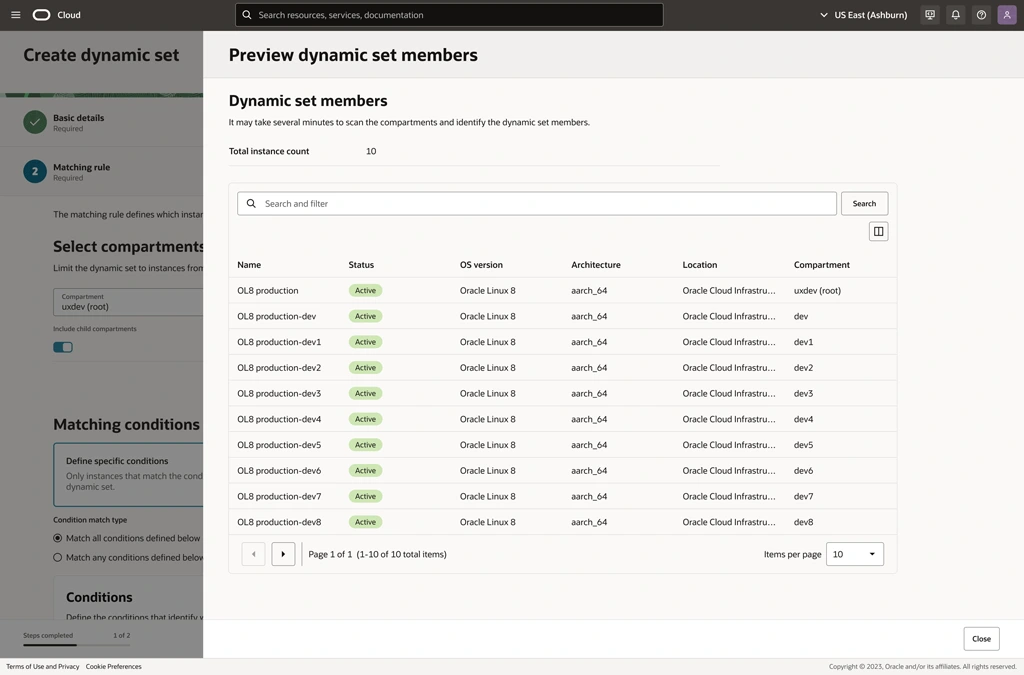
- Better pre-action confidence by previewing the matching members before creating or changing a set.
- Clearer operation results for updating instances.